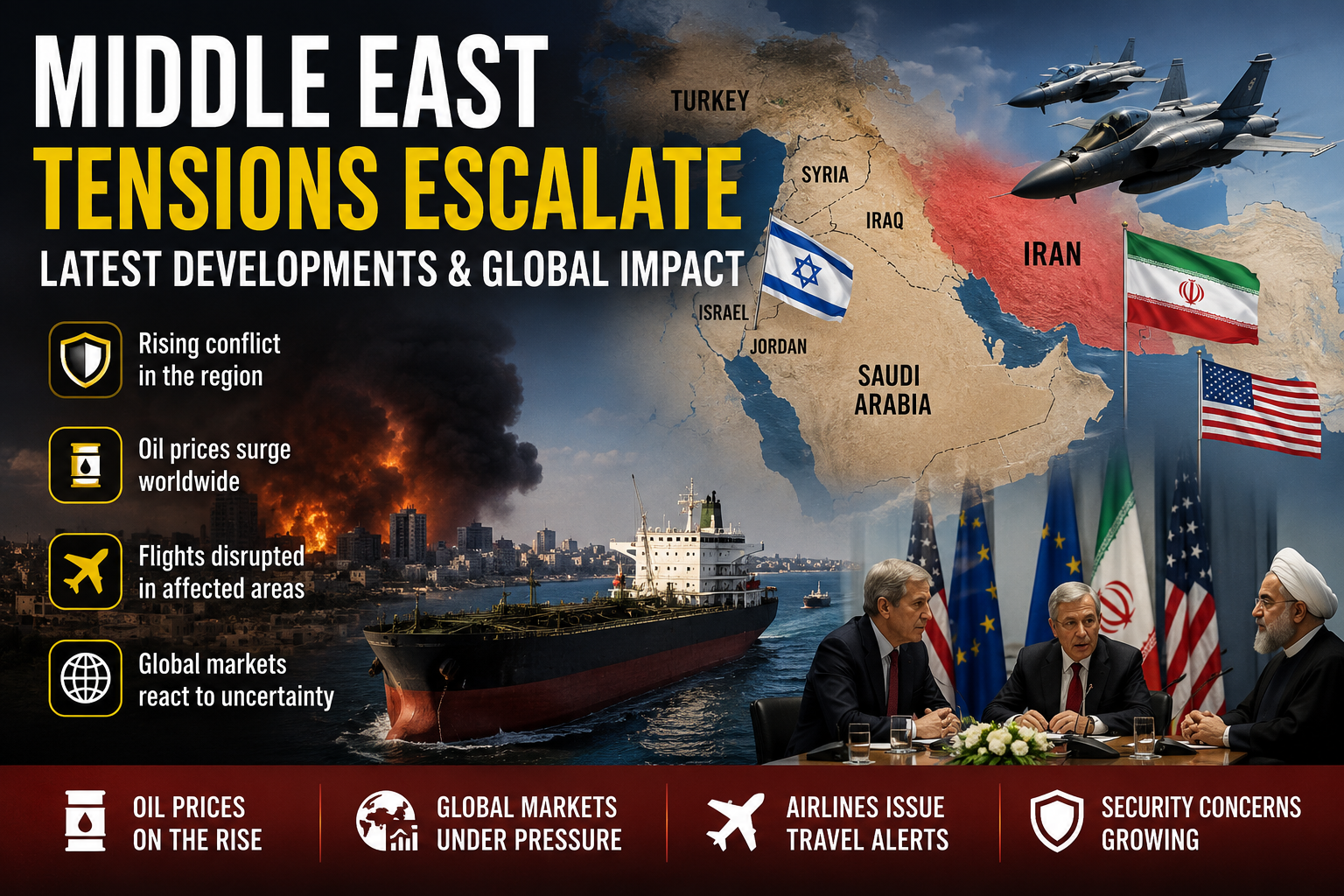
Middle East Tensions Escalate: Latest Developments and Their Global Impact
The Middle East continues to be one of the world’s most closely watched regions as military tensions, diplomatic efforts, and economic concerns unfold. Recent developments involving Iran, the United States, Israel, and several Gulf countries have increased uncertainty across the region and raised concerns about global security, oil supplies, and international trade.
Governments around the world are closely monitoring the situation because any major escalation could have consequences far beyond the Middle East. Rising fuel prices, disrupted shipping routes, and changes in global financial markets are just some of the possible effects.
What Is Happening in the Middle East?
In recent days, military activity has intensified following exchanges involving Iran and the United States. Reports indicate that strategic locations, shipping routes, and regional security have become central issues in the ongoing conflict. At the same time, diplomatic efforts continue, although progress remains uncertain.
Several countries in the Gulf region have increased security measures while monitoring developments that could affect civilian infrastructure and international trade.
Oil Markets React to Rising Tensions
One of the biggest global concerns is the impact on oil supplies.
The Middle East is home to some of the world’s most important energy producers. Any disruption to shipping routes or oil exports can quickly affect international fuel prices.
Recent reports show that crude oil prices have risen as investors worry about possible disruptions to energy transportation. Some oil tankers have also changed their routes because of security concerns in the region.
Higher oil prices often lead to increased transportation costs, higher inflation, and more expensive goods for consumers worldwide.
Impact on International Flights
Air travel has also been affected.
Several international airlines have temporarily adjusted or suspended flights to parts of the Middle East because of security concerns. Airlines continue to monitor official safety advisories before resuming normal operations.
Passengers planning to travel to or through the region are advised to check directly with their airline for the latest updates before departing.
Global Economic Concerns
Financial markets generally react quickly to geopolitical uncertainty.
Investors often move toward safer assets when regional conflicts increase, while energy prices and shipping costs can become more volatile. Businesses that rely on international trade may also face delays if important shipping routes experience disruptions.
Economists are watching the situation carefully because prolonged instability could influence inflation and economic growth in many countries.
Diplomatic Efforts Continue
Despite the ongoing tensions, several governments continue to support diplomatic negotiations aimed at reducing the risk of a wider regional conflict.
International organizations and regional partners have called for restraint and peaceful dialogue. However, recent military exchanges have made negotiations more challenging.
Why This Matters to the World
The Middle East plays a vital role in global energy production, international shipping, and regional security.
Events in the region can affect:
- Global oil and fuel prices
- Airline operations
- International trade
- Stock markets
- Inflation
- Tourism
- Supply chains
Because of these connections, developments in the Middle East are closely followed by governments, businesses, and financial markets around the world.
Frequently Asked Questions
Why is the Middle East important to the global economy?
The region is a major producer of oil and gas and includes key international shipping routes that support global trade.
Why are oil prices increasing?
Markets are reacting to concerns that military tensions could disrupt oil production or transportation.
Are flights being affected?
Yes. Some airlines have temporarily suspended or rerouted flights to certain destinations due to security concerns.
Will the situation improve soon?
The situation remains fluid. Diplomatic discussions continue, but future developments will depend on decisions made by the parties involved.
Conclusion
The Middle East remains at the center of global attention as military tensions, diplomatic initiatives, and economic concerns continue to develop. While governments are working to prevent further escalation, uncertainty remains high.
As events evolve, it is important to rely on verified information from trusted news sources and official statements. The coming days are expected to be significant in determining whether diplomacy can reduce tensions or whether the conflict will have broader regional and global consequences.